Why Silk Prices Vary: 4 Cost Drivers Buyers Must Evaluate
Why Silk Prices Vary: 4 Cost Drivers Buyers Must Evaluate
In professional sourcing, approving a silk product based solely on fiber content and dimensions is a costly mistake. Two fabrics can both be labeled "100% Mulberry Silk" yet differ drastically in price, drape, surface shine, tensile strength, color stability, shrinkage, and delivery time.
Why does one supplier quote $15 per yard while another quotes $30 for the exact same nominal specs? The answer lies in the underlying cost drivers that a headline specification fails to capture. This article breaks down the four connected variables that determine the true cost of silk products—and how brand owners can protect their margins before a sample becomes a production commitment.
Momme Weight: The Direct Material Cost
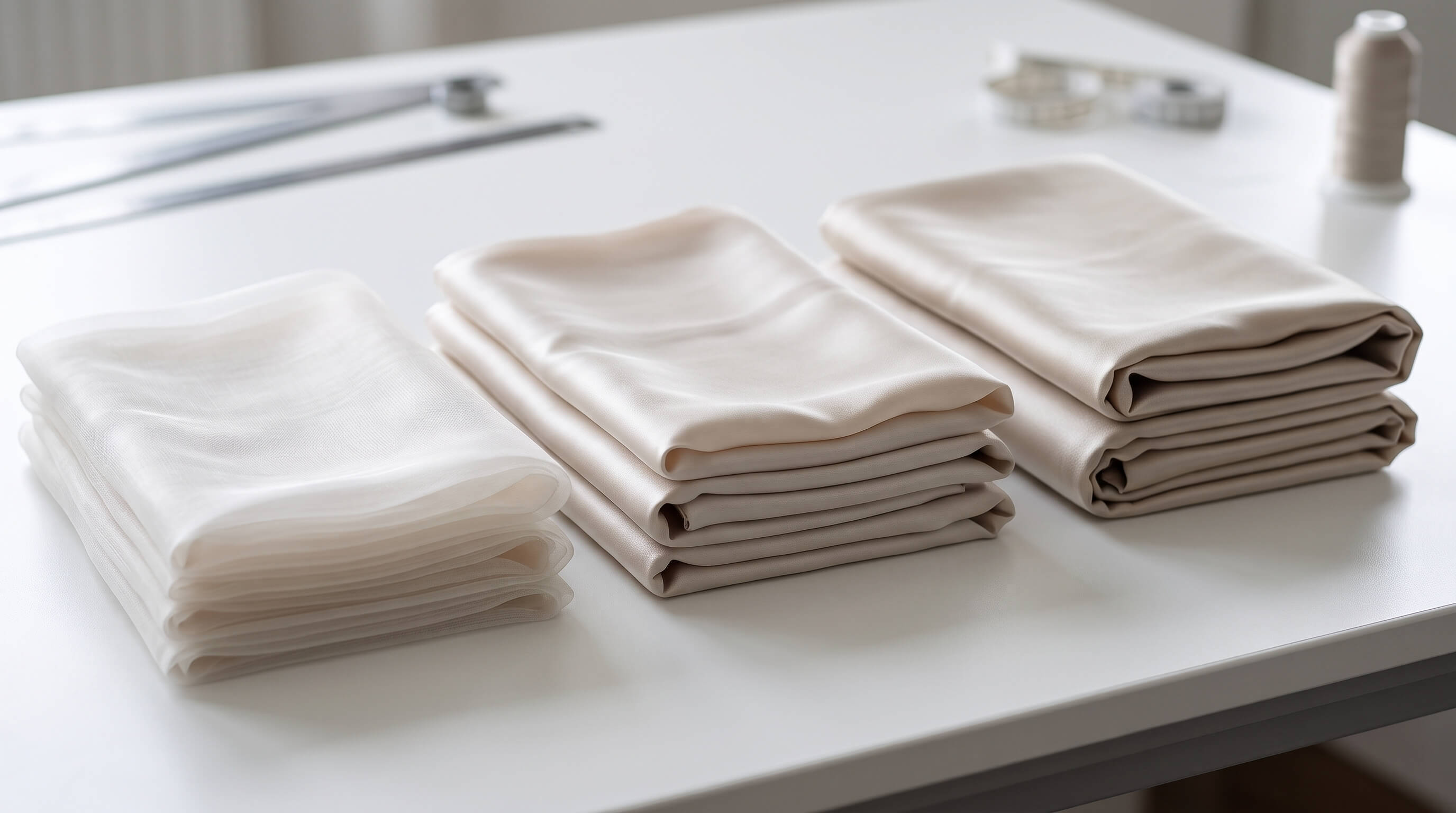
A fabric quoted at 22 momme is not automatically the right choice for every silk product; the correct specification depends on how the item will be used, handled, and priced. Momme indicates the density of silk fabric by weight over a defined area. It helps buyers compare material substance, but it is not a universal quality grade.
From a costing perspective, momme directly dictates raw material consumption:
- 12–16 momme: Light and flowing. Ideal for summer apparel, scarves, and linings. It supports a lower target cost but offers less coverage.
- 19–22 momme: The industry standard for pillowcases, sleepwear, and premium apparel. It balances softness, coverage, and cost.
- 25–30+ momme: Heavy and substantial. Suitable for duvet covers or structured garments. It significantly increases material cost, shipping weight, and sometimes production complexity.
Higher momme doesn't guarantee better performance, but it guarantees a higher material cost. An unnecessarily heavy fabric can make a garment less fluid or push a product beyond its target retail price. Required momme should be selected based on product function and target margins, not a generic "premium" claim.
Before accepting a quote, you must confirm: fabric width, stated fiber composition, weave construction, finished weight tolerance, expected shrinkage, and whether the quoted momme applies to greige or finished fabric. If these are missing, suppliers may quote the same nominal momme while delivering completely different landed costs.
Takeaway: Momme weight sets the material baseline, but product function and target price determine whether that baseline is commercially viable.
Weave Structure: Manufacturing Complexity & Risk
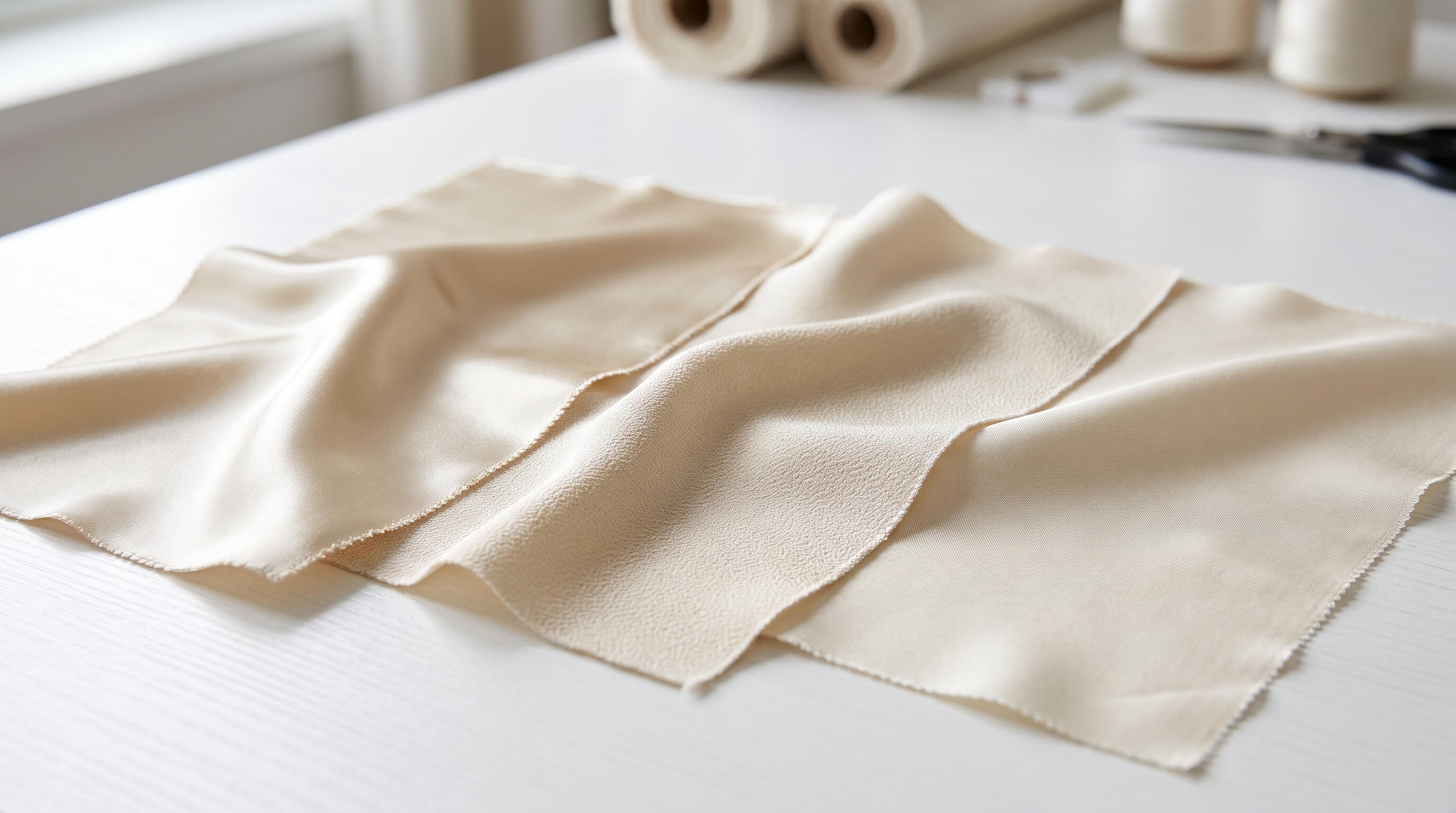
Two fabrics can use the same silk fiber and similar weight yet produce very different garments. The weave controls how light reflects, how the fabric bends, and how it responds to wear. More importantly, it dictates how difficult (and expensive) the fabric is to cut and sew.
| Construction | Appearance & Hand Feel | Best For | Procurement Risk (Cost Impact) |
|---|---|---|---|
| Charmeuse (Satin weave) | Smooth, lustrous face with high reflectivity. | Slips, lingerie, pillowcases, luxury blouses. | Slippery handling complicates sewing, leading to higher labor costs and potential snagging rejects. |
| Crepe de Chine (Crepe) | Subtly pebbled, matte finish. Soft and grainy. | Tailored blouses, pants, scarves. | Easier to handle, but if you expect a high-gloss finish, you may reject bulk goods. |
| Habotai (Plain weave) | Light, smooth, and plain. | Linings, printed scarves, sleep accessories. | Lower material cost, but may feel too thin for premium price points. |
These descriptions are starting points, not guarantees. A sample may feel different after washing, softening, or sand washing. If the finishing route is not agreed in advance, the approved sample will not represent production. A purchase specification must state the weave, momme, finished width, finish, and shrinkage tolerance—not simply "100% silk."
Takeaway: The correct weave is determined by the product’s required surface, movement, and price—not by a generic preference for one silk type.
Dyeing and Finishing: The Hidden Cost of Quality Control

A color approved without a physical standard, or a finish applied without dimensional testing, can turn an accepted order into rework and delayed delivery. Cheap dyeing is a false economy; it saves pennies per yard but risks thousands in rejected goods.
Pantone Matching & Shade Approval: Silk’s sheen makes the same dye appear different under daylight, store lighting, and office LEDs. Buyers must request a Pantone target or approved physical standard, lab dips made with the intended silk, and documented tolerance for color difference. Always retain the approved lab dip with the purchase order. This is a core control for silk batch-to-batch consistency, not a cosmetic preference.
Sand Washing & Pre-Shrinking: If sand washing is added without defining its purpose, the result may be softer but also different in sheen and width. Furthermore, pre-shrinking must be assessed before cutting. Uncontrolled dimensional change can create incorrect garment measurements, resulting in mass returns. Require finished-width and shrinkage checks after the planned washing process, rather than relying on greige-fabric data.
Colorfastness Testing: Silk dyeing colorfastness testing must match the product's end use and care instructions. Agree on methods and pass criteria before bulk production, such as ISO 105-C06 for washing, ISO 105-E04 for perspiration, and ISO 105-X12 for rubbing.
Takeaway: Dyeing and finishing controls protect not only appearance, but also dimensional accuracy, testing compliance, and delivery schedules—ultimately protecting your bottom line.
Origin and Reeling: Raw Material Premiums
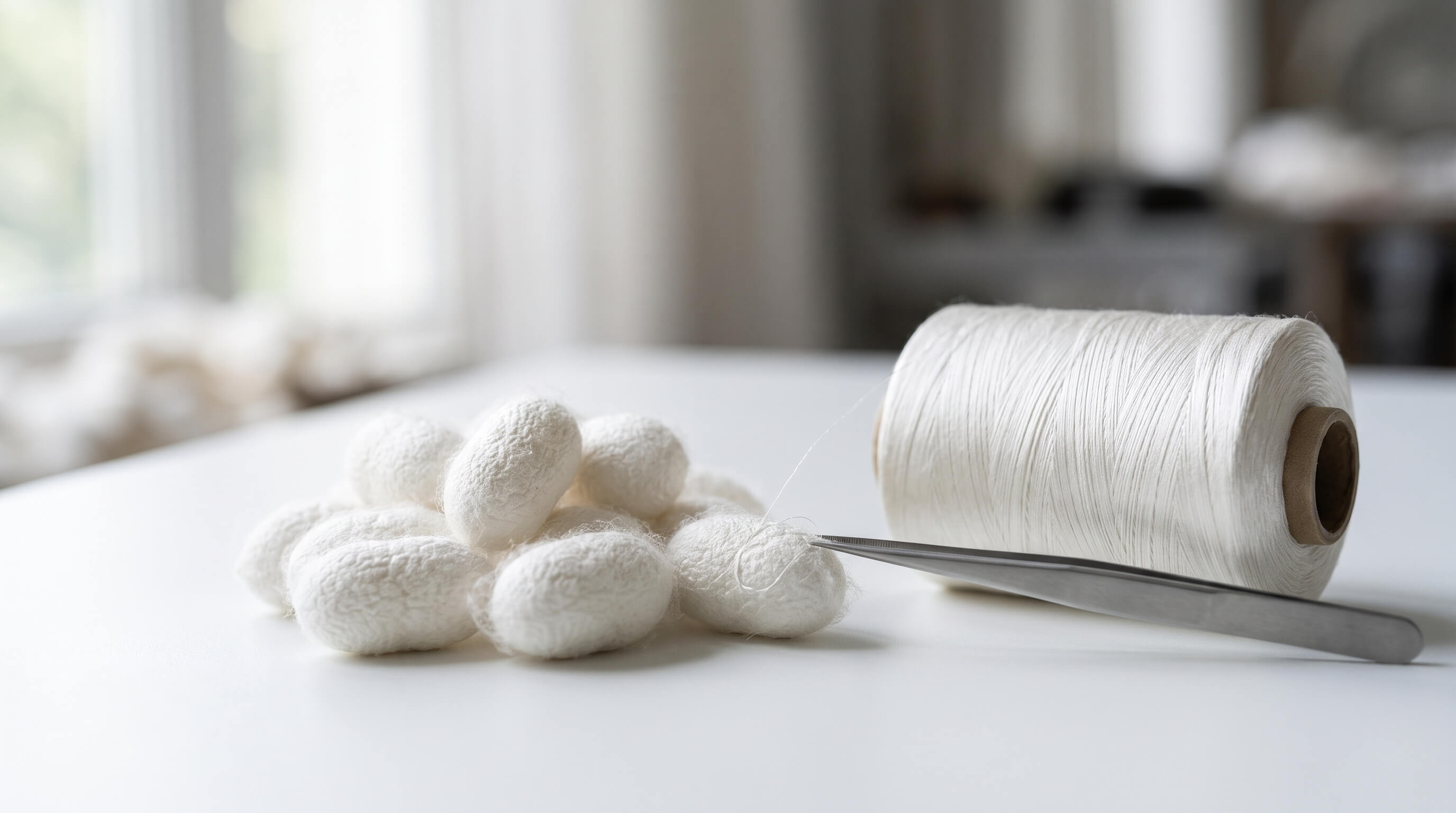
A 6A raw silk designation can help buyers compare sourcing options, but it cannot guarantee finished-fabric strength or dye performance.
If filament quality varies within a lot, the finished fabric may show uneven surface regularity, inconsistent luster, or variable dye uptake. Buyers should request specifications for filament uniformity, yarn cleanliness, and lot composition rather than treating "6A" as a complete quality standard.
Poor reeling tension can stretch or damage filaments, while unstable winding can create irregular yarn packages. These defects later appear as weak areas, streaks, or inconsistent fabric density. A controlled supplier monitors reeling tension, winding condition, and equipment settings. Factory temperature and humidity also affect static and yarn flexibility.
Without production records, a supplier cannot reliably explain why a repeat order differs from an approved sample. COCOONMAN requires traceable documentation covering lot identification, reeling conditions, approved shade references, finished-width checks, and final inspection results.
Takeaway: A nominal silk grade has limited purchasing value unless the supplier’s reeling controls, factory conditions, testing, and batch records prove repeatable performance.
Set Your Cost & Quality Standard Before Mass Production

Before approving a bulk order, convert the product brief into measurable production requirements. Four questions determine whether the supplier’s quotation reflects a workable specification and true cost:
- What Will the Product Actually Face? Define whether the item will be worn occasionally, washed frequently, or exposed to perspiration. This guides the suitable momme weight, weave, finish, and care instructions.
- What Cost Structure Must the Supplier Meet? Set a target price with cost components visible: fabric, dyeing, finishing, cut-and-sew, testing, and freight. A suspiciously low quote usually means shortcuts were taken in raw materials or testing.
- Which Tests and Market Rules Apply? Confirm the destination market, fiber-content declaration, care-label format, and restricted-substance requirements. Put agreed methods and pass criteria into the purchase specification.
- What Does the Factory Control In-House? Ask which processes (dyeing, washing, pre-shrinking, inspection) are performed internally and which are subcontracted. Outsourced steps need named facilities and approval responsibility.
COCOONMAN coordinates material selection, product development, supplier communication, quality documentation, sampling, and finished-goods delivery. Send us your fabric specifications, target quantity, destination market, and care-label requirements for project assessment and sample development.
Takeaway: A controlled bulk order begins with four documented decisions—use, cost, compliance, and factory capability—before sampling becomes a production commitment.
FAQ
Is a higher momme weight always better?
No, a higher momme weight mainly indicates greater fabric density and is not a universal quality ranking. The suitable range depends on the intended use, required drape, opacity, budget, and care instructions. Yarn quality, weave types, dyeing, and finishing can change the final performance just as significantly.
What should a buyer request to verify silk batch-to-batch consistency?
Ask for lot numbers, raw-material records, production records, momme and width measurements, approved color references, and final inspection records. Shrinkage data, tensile strength results, and applicable colorfastness testing should also be included.
Is 6A silk enough to guarantee a high-quality finished fabric?
No, 6A is a reference for raw silk quality and does not certify the finished fabric as a whole. It cannot confirm the actual weave, momme weight, tensile strength, dimensional stability, or shade consistency. Finished silk products still require product-specific inspection before approval.
Conclusion
Silk products can differ in price, hand feel, and delivery risk because material density, weave construction, dyeing, and reeling quality are not captured by a headline specification alone.
Defining these controls before sampling helps limit shade disputes, shrinkage claims, and batch-to-batch variation while protecting target margins. When evaluating a quote, look beyond the bottom-line price and assess the hidden costs of poor quality.
Send COCOONMAN your fabric specification, target quantity, destination market, and wash-label requirements for a structured project assessment and sample plan. Reliable silk sourcing rests on documented standards, controlled production, and verified test results—not a silk label alone.